Discover the Ultimate Coffee Brewing Technique

Coffee is more than just a beverage; it is a ritual, a passion, and for many, an essential part of daily life. The quest for the perfect cup of coffee drives enthusiasts to explore various brewing techniques, seeking that ultimate balance of flavor, aroma, and texture. In this article, we will delve into the art and science of coffee brewing, guiding you to discover the ultimate technique that suits your palate and lifestyle.
Understanding Coffee Brewing
Before we dive into specific techniques, it’s important to understand what coffee brewing entails. At its core, brewing is the process of extracting flavors from coffee grounds using water. This extraction is influenced by several factors, including the grind size, water temperature, brewing time, and coffee-to-water ratio. Each brewing method manipulates these variables differently, resulting in unique flavor profiles.
The Role of Coffee Beans
The quality of your coffee starts with the beans. The ultimate brewing technique is ineffective if the beans are of poor quality. Consider the following when selecting your coffee beans:
- Origin: Coffee beans from different regions have distinct flavor profiles. For instance, Ethiopian beans often have fruity and floral notes, while Colombian beans tend to be more nutty and sweet.
- Roast Level: The roast level affects the flavor and aroma of the coffee. Light roasts preserve the beans’ original flavors, while dark roasts emphasize deeper, caramelized notes.
- Freshness: Coffee is best when fresh, so try to purchase beans roasted within the last two weeks.
Grind Size and Its Impact
Grind size is a crucial factor in brewing coffee. The size affects the extraction rate, with finer grinds extracting more quickly and coarser grinds taking longer. Here are some general guidelines for grind sizes in popular brewing methods:
- Espresso: Fine grind
- Pour-over (e.g., V60, Chemex): Medium-fine to medium grind
- French Press: Coarse grind
- Aeropress: Medium to fine grind
- Cold Brew: Extra coarse grind
Water Quality and Temperature
Water makes up about 98% of your coffee, making its quality paramount. Use filtered water to avoid any off-flavors from minerals or chlorine. The temperature of the water also plays a significant role in extraction:
- Too Hot: Water above 205°F can over-extract, leading to bitter flavors.
- Too Cold: Water below 195°F may under-extract, resulting in a sour or weak cup.
- Optimal Range: Aim for water between 195°F and 205°F for most brewing methods.
Exploring Popular Brewing Techniques
Espresso
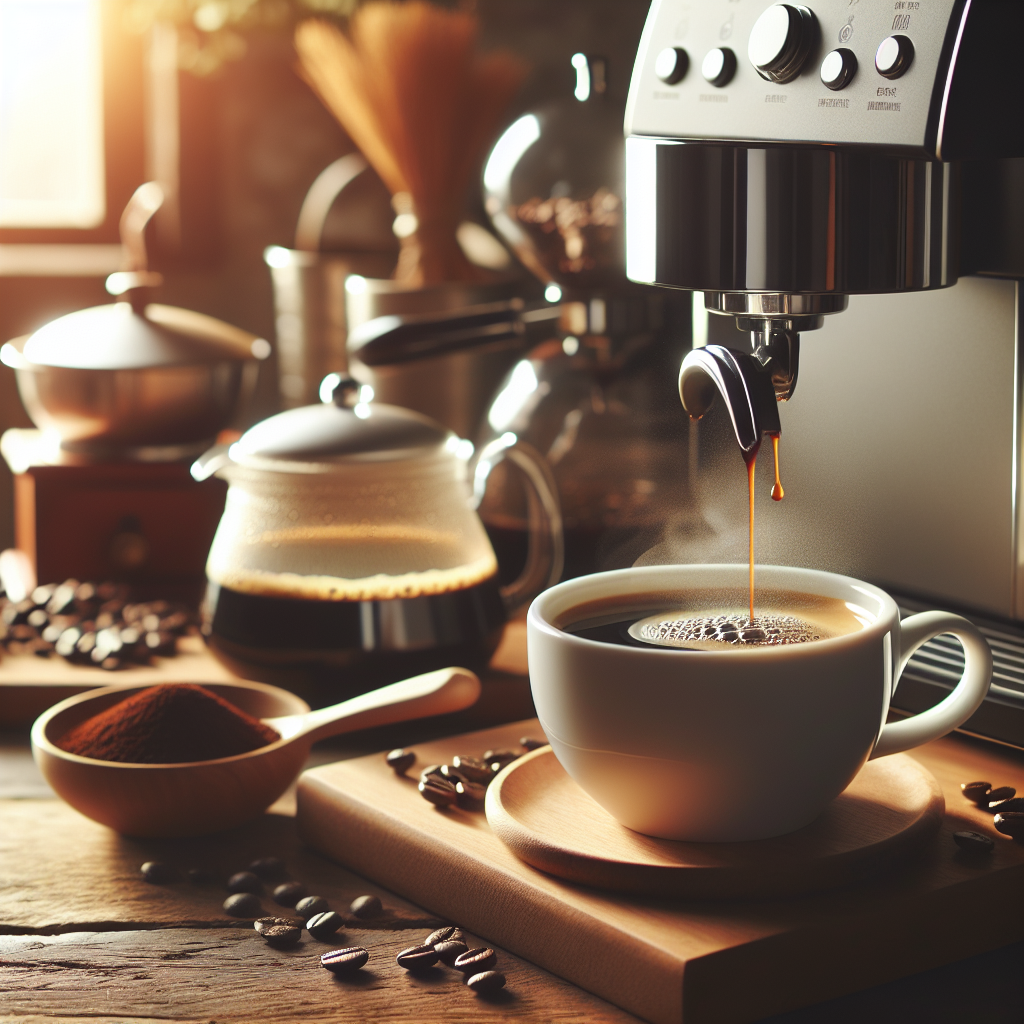
Espresso is not just a drink; it’s a brewing method that uses high pressure to force water through finely-ground coffee. The result is a concentrated shot with a rich crema on top. It’s the foundation for many popular coffee drinks, such as lattes and cappuccinos.
Espresso requires precision in grind size, dose, and tamping pressure. It’s ideal for those who appreciate a quick, intense coffee experience.
Pour-over
The pour-over method allows for a lot of control over the brewing process, making it a favorite among coffee aficionados. Using devices like the V60 or Chemex, you manually pour hot water over coffee grounds, allowing it to drip through a filter.
This technique highlights the coffee’s nuances, offering a clean and complex cup. It requires patience and practice to perfect the pour rate and spiral motion.
French Press
The French Press is a classic immersion brewing technique that involves steeping coarse coffee grounds in hot water before pressing them down with a plunger. This method produces a full-bodied coffee with a rich mouthfeel due to the natural oils retained in the brew.
It’s straightforward and forgiving, making it an excellent choice for beginners and those who enjoy a robust coffee.
Aeropress
The Aeropress is a versatile and portable brewing device that combines immersion and pressure. It offers flexibility in brewing time and strength, allowing for experimentation with different coffee styles, from espresso-like to Americano.
This method is perfect for travelers and those who appreciate a quick, customizable brew.
Cold Brew
Cold Brew involves steeping coarse coffee grounds in cold water for an extended period, usually 12 to 24 hours. The result is a smooth, low-acidity coffee concentrate that can be diluted with water or milk.
It’s a refreshing option for hot days and can be prepared in large batches for convenience.
The Ultimate Brewing Technique
The ultimate coffee brewing technique is subjective and depends on personal preferences. However, achieving the perfect cup involves mastering the variables discussed: bean quality, grind size, water quality and temperature, and brewing method. Here are some tips to guide you:
- Experiment: Try different brewing methods to discover which one you enjoy most. Each method offers a unique coffee experience.
- Take Notes: Record your brewing parameters and results. This practice helps you refine your technique over time.
- Invest in Quality Equipment: A good grinder, scale, and kettle can significantly enhance your brewing consistency and precision.
- Stay Open-minded: Coffee is an ever-evolving field with new methods and innovations. Keep exploring and learning.
Conclusion
In the pursuit of the ultimate coffee brewing technique, remember that the journey is as important as the destination. By understanding the fundamental principles of coffee brewing and exploring various methods, you’ll develop a deeper appreciation for this beloved beverage. Whether you prefer the convenience of a French Press or the precision of a pour-over, the ultimate technique is the one that brings you joy and satisfaction in every sip.
So, grab your favorite beans, fire up the kettle, and embark on your coffee brewing adventure. The perfect cup is waiting to be discovered.
#ChatGPT assisted in the creation of this article.



Post Comment